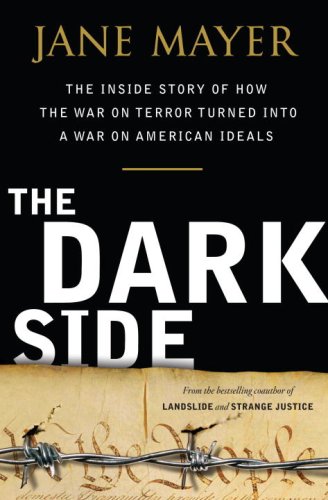
Today, The New York Times ran two articles on a new book that some have touted as the one book you have to read before the upcoming presidential election. I strongly believe in making informed decisions and better understanding the world around you, so I submit this reading choice to you.
It is called The Dark Side: The Inside Story of How the War on Terror Turned into a War on American Ideals by Jane Mayer.
From the reviews, I've gathered that it is a fantastic piece of nonfiction. Both professional critics and randoms on goodreads.com praise its exhaustive research, its fascinating subject matter, and, most importantly, its readability (since it is a book, after all). The book's scope seems to be pretty unique - it focuses on the strategic manipulation of the Constitution to achieve the goals of the war on terror.
Now, I know that not all of the people who read my blog are politically left-leaning, so there may be some visceral reactions to this post right now, so let me explain myself. This isn't an I-hate-the-Bush-administration post (because if I started one of those, I wouldn't go to sleep tonight). What I'd like to do is quickly speak (ironic, as I'm typing, but bear with me) to why I think this read is important and relevant to everyone.
I think it's a necessary skill to remove yourself from a situation, to gain perspective, to acknowledge your opinions as subjective creations from your psyche and admit to yourself that they are not truths, no matter how much you wish they were. So, aside from the fact that you may or may not believe the war on terror, as we now define it, was necessary, there are significant issues that this work discusses. Significant issues that can help us get a bit of perspective.
I don't think that moral codes are immutable. I've never met a single person of any political persuasion that has exemplified an unwavering belief system that functions all the time in any situation. And expectedly so: life is complicated and a set of black and white rules would be a surprising solution for the complexities of the real world. Case in point: the Constitution. The Constitution was our set of American ideals, our code of conduct, and, I could argue that it still is, to some extent. However, a lot of the basic tenets of universal freedom and liberty have been suspended during this extraordinary time. The Constitution is no longer so black and white.
(" But extraordinary times call for extraordinary measures.") But what defines extraordinary? When do you cross the line that separates ordinary from extraordinary? When does the administration get to decide we're no longer playing by the rules anymore? The answer really can't be "never" (as much as I'd like it to be). I think that's asking too much of mere mortals. But when did we decide to sacrifice the long term for the short term? ("Yes, we're violating the Geneva Convention, but we need to be safe today.") The country's been threatened from abroad before, some would argue, to a greater, more deadly extent. What made this time different? Was it the culture of Islam? Was it the vehicle of terror? Was it jihadists "not playing by the rules"? Was it the neoconservative, radical foreign policy views of the Bush administration? Was it a combination of the two: a sort of perfect storm?
This book is important, no matter who you are because we all have rights, specifically, rights we'd prefer remained unviolated. But sadly, rights are social constructs. We all believe in some rights. We have them; we exercise them. So this book pertains to you. When do you feel comfortable giving them up? When do you voluntarily relinquish them? If they go on hiatus, will they return just as strong as they were before? By investigating the Bush administration's interactions with constitutional law, I'm hoping this book makes me think about the answers to these not-so-hypothetical questions.
Several reviewers have commented that they have nightmares after reading this book, that they feel outraged, sick, repulsed. So you could feel this way too. Or you could stand up and cheer (if you're a sociopath). Either way, I think it's necessary information that needs consideration.
NYT review here. Bob Herbert's commentary here.


No comments:
Post a Comment