Monday, July 28, 2008
You may be wondering
where I went. Well, I'm in Colorado ... Vail, to be precise. I'm at the 2008 Vail International Dance Festival with two good friends Damian Woetzel and Heather Watts. I'm working on getting some online traction for the festival which is both easier and harder than one would imagine. It's hard because taking photos and videos is tedious when there are so many to sort through. Easy because there are so many great things to take photos of. If you're a member of Facebook, become a fan of the Vail International Dance Festival. If you're not, you can check out the festival's flickr account managed here. And here's my favorite video that I've captured (although you can simply look at the vailvalleyfoundation's youtube channel).

Tuesday, July 22, 2008
"The One You Have To Read"
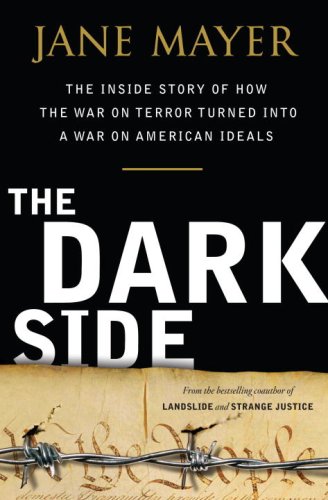
Today, The New York Times ran two articles on a new book that some have touted as the one book you have to read before the upcoming presidential election. I strongly believe in making informed decisions and better understanding the world around you, so I submit this reading choice to you.
It is called The Dark Side: The Inside Story of How the War on Terror Turned into a War on American Ideals by Jane Mayer.
From the reviews, I've gathered that it is a fantastic piece of nonfiction. Both professional critics and randoms on goodreads.com praise its exhaustive research, its fascinating subject matter, and, most importantly, its readability (since it is a book, after all). The book's scope seems to be pretty unique - it focuses on the strategic manipulation of the Constitution to achieve the goals of the war on terror.
Now, I know that not all of the people who read my blog are politically left-leaning, so there may be some visceral reactions to this post right now, so let me explain myself. This isn't an I-hate-the-Bush-administration post (because if I started one of those, I wouldn't go to sleep tonight). What I'd like to do is quickly speak (ironic, as I'm typing, but bear with me) to why I think this read is important and relevant to everyone.
I think it's a necessary skill to remove yourself from a situation, to gain perspective, to acknowledge your opinions as subjective creations from your psyche and admit to yourself that they are not truths, no matter how much you wish they were. So, aside from the fact that you may or may not believe the war on terror, as we now define it, was necessary, there are significant issues that this work discusses. Significant issues that can help us get a bit of perspective.
I don't think that moral codes are immutable. I've never met a single person of any political persuasion that has exemplified an unwavering belief system that functions all the time in any situation. And expectedly so: life is complicated and a set of black and white rules would be a surprising solution for the complexities of the real world. Case in point: the Constitution. The Constitution was our set of American ideals, our code of conduct, and, I could argue that it still is, to some extent. However, a lot of the basic tenets of universal freedom and liberty have been suspended during this extraordinary time. The Constitution is no longer so black and white.
(" But extraordinary times call for extraordinary measures.") But what defines extraordinary? When do you cross the line that separates ordinary from extraordinary? When does the administration get to decide we're no longer playing by the rules anymore? The answer really can't be "never" (as much as I'd like it to be). I think that's asking too much of mere mortals. But when did we decide to sacrifice the long term for the short term? ("Yes, we're violating the Geneva Convention, but we need to be safe today.") The country's been threatened from abroad before, some would argue, to a greater, more deadly extent. What made this time different? Was it the culture of Islam? Was it the vehicle of terror? Was it jihadists "not playing by the rules"? Was it the neoconservative, radical foreign policy views of the Bush administration? Was it a combination of the two: a sort of perfect storm?
This book is important, no matter who you are because we all have rights, specifically, rights we'd prefer remained unviolated. But sadly, rights are social constructs. We all believe in some rights. We have them; we exercise them. So this book pertains to you. When do you feel comfortable giving them up? When do you voluntarily relinquish them? If they go on hiatus, will they return just as strong as they were before? By investigating the Bush administration's interactions with constitutional law, I'm hoping this book makes me think about the answers to these not-so-hypothetical questions.
Several reviewers have commented that they have nightmares after reading this book, that they feel outraged, sick, repulsed. So you could feel this way too. Or you could stand up and cheer (if you're a sociopath). Either way, I think it's necessary information that needs consideration.
NYT review here. Bob Herbert's commentary here.
Sunday, July 20, 2008
A Busy Weekend
makes for not much reading and more than enough exhaustion. After a weekend dominated by a family wedding (OSU-themed, to be precise), and punctuated with a Saturday morning viewing of The Dark Knight, a Friday visit by the parents, a Sunday brunch at my uncle's house, and a Sunday concert, I'm pooped and about to pass out. So no reading tonight. As sad as I am to leave Bringing Home the Birkin, I've moved on to a book listed under Tonello's favorites on goodreads.com, Don't Get Too Comfortable. In a nutshell, it takes a look at the excesses of American culture. A short read, it's a well-written and well-constructed critique of some of the more ridiculous aspects of what we believe to be "normal" in our contemporary world life. I should finish it within the next few days, and then I'll have some more coherent thoughts about the work.
Now I'm off to watch my new obsession, HBO's In Treatment, which is a fantastically written and acted look at several patients in their sessions with a therapist. If you have HBO or On Demand, you should take a closer look. Seriously.
Now I'm off to watch my new obsession, HBO's In Treatment, which is a fantastically written and acted look at several patients in their sessions with a therapist. If you have HBO or On Demand, you should take a closer look. Seriously.
Friday, July 18, 2008
Bringing Home the Birkin, to Mr. Tonello
I posted the below comment to Mr. Tonello on the previous post, but figured I should share it here in case it gets lost. (On a semi-unrelated note, the Times ran a list of book summaries for other types of beach reading, available here.)
Sorry for the lack of posting! I've been suffering from internet problems, so I've been saving a few things in draft form to post later. Anyway, just wanted to let you know how thrilled I am that you liked my previous post. I loved your book in so many ways. Aside from it being entertaining, it was so succint, focused, and well-presented that, in my opinion, it seems you've mastered two of the most important aspects of storytelling: knowing where to start and knowing when to stop! It made for a really fun read.
I had skimmed the NYT review prior to buying your book, but I didn't read it that closely until afterwards. (Intentional on my part, since I didn't want what's-her-face's opinion to taint my reading experience.) And, to be honest, it really frustrated me!
The entire review, save for the last paragraph was spent either regurgitating so much of the plot that it was almost a spoiler, or discussing the history of the Birkin bag. Neither should've taken the space it did, and I would've been more interested to hear what was good about the book/what the reviewer liked, rather than a summary.
So in the final paragraph, she barely touches on a substantive review, and all she has to say is that you could have uncovered some deeper truths?? I couldn't believe it. How bizarre and ill-fitting would it have been if this adventure-comedy had turned serious social commentary in the flip of a page? I can hardly think of something more out of the scope of what you're writing about. And, on top of that, I can almost picture the review she would've written if you had included said nuggets of wisdom. ("His social commentary on high-brow consumerism seemed misplaced and poorly constructed and entirely out of place within the scope of the narrative...")
I don't think the reviewer honestly could have thought including a commentary would have made your work better. Rather, I think she was desperate to find something wrong with it, something to disagree with.
Scope is something so subjective that it's difficult to critique. I think once you get past the crucial elements that need to be included in a story, the reviewer needs to respect the discretion of the author. If an author chooses to leave out a non-critical element of the story or choses to define the breadth of the plot in a certain way, can you rightfully criticize them for doing so if all necessary components ARE included? It's a tough line to draw, but in the end, I think not.
As much as she thinks a social commentary should've been included, she should acknowledge the fact that it's not central to the aim of the book, that you chose the scope of your writing as you saw fit, and the book isn't any less great for not including it. My point? I just don't think it was worth mentioning. You define the scope, not her, so why can't she evaluate you based on what you've put forward instead of what you haven't? Sorry I got so carried away - this kind of criticism plagued me during my college years and I clearly still harbor feelings of ill will toward former TFs.
hope all is well with you and you continue writing! (are you going to? more stories?)
Bringing Home the Birkin review available for reading here.
Sorry for the lack of posting! I've been suffering from internet problems, so I've been saving a few things in draft form to post later. Anyway, just wanted to let you know how thrilled I am that you liked my previous post. I loved your book in so many ways. Aside from it being entertaining, it was so succint, focused, and well-presented that, in my opinion, it seems you've mastered two of the most important aspects of storytelling: knowing where to start and knowing when to stop! It made for a really fun read.
I had skimmed the NYT review prior to buying your book, but I didn't read it that closely until afterwards. (Intentional on my part, since I didn't want what's-her-face's opinion to taint my reading experience.) And, to be honest, it really frustrated me!
The entire review, save for the last paragraph was spent either regurgitating so much of the plot that it was almost a spoiler, or discussing the history of the Birkin bag. Neither should've taken the space it did, and I would've been more interested to hear what was good about the book/what the reviewer liked, rather than a summary.
So in the final paragraph, she barely touches on a substantive review, and all she has to say is that you could have uncovered some deeper truths?? I couldn't believe it. How bizarre and ill-fitting would it have been if this adventure-comedy had turned serious social commentary in the flip of a page? I can hardly think of something more out of the scope of what you're writing about. And, on top of that, I can almost picture the review she would've written if you had included said nuggets of wisdom. ("His social commentary on high-brow consumerism seemed misplaced and poorly constructed and entirely out of place within the scope of the narrative...")
I don't think the reviewer honestly could have thought including a commentary would have made your work better. Rather, I think she was desperate to find something wrong with it, something to disagree with.
Scope is something so subjective that it's difficult to critique. I think once you get past the crucial elements that need to be included in a story, the reviewer needs to respect the discretion of the author. If an author chooses to leave out a non-critical element of the story or choses to define the breadth of the plot in a certain way, can you rightfully criticize them for doing so if all necessary components ARE included? It's a tough line to draw, but in the end, I think not.
As much as she thinks a social commentary should've been included, she should acknowledge the fact that it's not central to the aim of the book, that you chose the scope of your writing as you saw fit, and the book isn't any less great for not including it. My point? I just don't think it was worth mentioning. You define the scope, not her, so why can't she evaluate you based on what you've put forward instead of what you haven't? Sorry I got so carried away - this kind of criticism plagued me during my college years and I clearly still harbor feelings of ill will toward former TFs.
hope all is well with you and you continue writing! (are you going to? more stories?)
Bringing Home the Birkin review available for reading here.
Monday, July 14, 2008
Bringing Home the Birkin, a Wrap-up
So I've finished Bringing Home the Birkin. I spent the rest of Sunday grocery shopping, came home after a short bout at the office, nestled in with some spicy tuna rolls, watched The Breakfast Club, and now I'm writing this post with Viva La Vida on, the windows open, and a fresh breeze circulating. There's something about summer weekends right before they become oppressively hot that is quite perfect. Winter just doesn't compare.
To be honest, I think part of my good mood has to do with this book. Bringing Home the Birkin is a great read, of the summer persuasion or otherwise. I'm going to try to explain what Michael Tonello gets right without giving away too much of the good stuff.
The story begins with him moving to Barcelona after growing tired with Massachusetts. (I can identify with this. Only I moved to Ohio, which is different.) When his job falls through, he's left with a 5 year lease, no Spanish skills, and no work visa. Quite frankly, this is where my story would have taken a turn towards me rocking back and forth in the fetal position, but this man is an opportunist. After a few successful auctions on Ebay, he stumbles upon an Hermes underworld of sorts where thousands of scarf and handbag collectors are constantly on the prowl for rare and vintage Hermes merch. That's about the first 50 pages.
The rest of the book entails how he starts amassing knowledge about the Hermes brand, navigating the world of ecommerce, discovering the "code" that secures him Birkins (that are known for their exclusivity and 2 year waitlist - only he can score them in 30 minutes), and the chaos that invariably comes with moving upwards of a million dollars of merchandise in a single year.
You don't need to know much about Hermes or designer labels to appreciate the story. The fact that Tonello starts out relatively green on the subject allows the audience to learn along with him. There's a healthy amount of romance, which is always appreciated, as well as a good dose of drama (which seems par for the course in the world of retail, luxury or otherwise).
There are a few things that made the story great. First, and probably most importantly, his writing is effortless. So often writing and plot don't match. I sometimes picture romance novelists (read: the ones whose book covers are adorned with naked torsos) writing with their reading glasses down their noses, crafting their words with such flourish that they seem to have convinced themselves that they are writing the next great American novel. They completely miss the point of their book and, as such, their novels tend to be awkwardly executed. Tonello doesn't suffer from this problem at all. In his Amazon.com mini-interview, he says that after responding to the dreaded "So, what do you do?" question, people suggested he write a book. So he did. And that's what it feels like. It feels like I've met a quirky, vibrant guy at a sidewalk cafe who has a ridiculously unique occupation, great fashion sense, and he's giving me "the long story," only it doesn't feel long, and it's shared over a bottle of red.
Second, it's not formulaic. As I wrote last night, I would wager that it's really difficult to encounter a formulaic memoir. People with formulaic lives often don't feel compelled to write about them. So the fact that he's even bothering to put pen to paper somewhat confirms he has a unique story to tell (which he does). So the non-fiction genre benefits him amazingly well. This, coupled with his writing style, doesn't make for much fluff. Every page matters, and every sentence contributes in a meaningful way. In my view, this is the best way to measure clarity. If I could rip out whole pages without losing much substance, there's a problem. With this book, I wish I could add pages, not lose them. Which brings me to my third point...
Scope. Tonello chooses the breadth of his story perfectly. It's apparent that this is one specific and admittedly bizarre period in his life and he chooses exactly where to start and end. The New York Times critic Christine Mulke commented that she was only disappointed that Tonello didn't draw any earth-shattering conclusions from his experience:
... and I think that's a little ridiculous. It would've been completely ill-fitting for Tonello to interject a social commentary on people's deep need to fill themselves with the superficial comfort of material goods. I mean, come on, that's a little much. To start off, it doesn't fit with his personality - he's too polite to go there. Many of Tonello's customers remain behind a veil of anonymity, and I think that sweeping judgments of his clientele (of whom he knows little about, aside from their handbag and scarf preferences) is not his objective, nor should it be. He's not out to make an example of anyone.
Yet if you're really looking for a commentary, it's already there. No, Tonello, doesn't spell it out for you. But he gives the reader the tools to make a few summations of their own. He depicts most characters (save a few) in a favorable light and not one of his customers is particularly greedy, yet there's still a disconcerting insatiability to their appetite for Hermes. (This isn't about getting just one handbag, folks.) And while they have wishlists of particular merchandise, you realize that these lists are never-ending. Once one wish is fulfilled, another quickly moves to the front to replace it. I won't continue on about what I surmised about luxury culture, but I think it's fair to say that you can aptly draw your own conclusions from the material Tonello provides. (Please note that I am in no way exempting myself. The amount I've spent on bags, clothes, and shoes is, at times, shameful.)
As a whole, this book is great (5-of-5-stars great). Here's how I know:
1. I laughed out-loud. Rare for me. And when I wasn't laughing, I was smiling. And when I wasn't smiling, I was frowning because I couldn't turn the pages fast enough.
2. Pictures have long been lost in "serious literature." I think they should make a valiant return, and this book has some. Some good ones, that is.
3. I want to move to Barcelona, eat paella, and drink Sangria. Maybe out of a Birkin.
4. Perhaps the most obvious evidence of this book's greatness? At the end I was left feeling bittersweet. Bitter because it was over. Sweet because someone new to the writing business told me a great story. To continue the sidewalk cafe chat analogy, I never wondered when he'd shut up, when we could get out of the glaring sun, or when the waiter would be back to refill my glass of wine.
Cheers, Mr. Tonello. That was a damn fine book.
To be honest, I think part of my good mood has to do with this book. Bringing Home the Birkin is a great read, of the summer persuasion or otherwise. I'm going to try to explain what Michael Tonello gets right without giving away too much of the good stuff.
The story begins with him moving to Barcelona after growing tired with Massachusetts. (I can identify with this. Only I moved to Ohio, which is different.) When his job falls through, he's left with a 5 year lease, no Spanish skills, and no work visa. Quite frankly, this is where my story would have taken a turn towards me rocking back and forth in the fetal position, but this man is an opportunist. After a few successful auctions on Ebay, he stumbles upon an Hermes underworld of sorts where thousands of scarf and handbag collectors are constantly on the prowl for rare and vintage Hermes merch. That's about the first 50 pages.
The rest of the book entails how he starts amassing knowledge about the Hermes brand, navigating the world of ecommerce, discovering the "code" that secures him Birkins (that are known for their exclusivity and 2 year waitlist - only he can score them in 30 minutes), and the chaos that invariably comes with moving upwards of a million dollars of merchandise in a single year.
You don't need to know much about Hermes or designer labels to appreciate the story. The fact that Tonello starts out relatively green on the subject allows the audience to learn along with him. There's a healthy amount of romance, which is always appreciated, as well as a good dose of drama (which seems par for the course in the world of retail, luxury or otherwise).
There are a few things that made the story great. First, and probably most importantly, his writing is effortless. So often writing and plot don't match. I sometimes picture romance novelists (read: the ones whose book covers are adorned with naked torsos) writing with their reading glasses down their noses, crafting their words with such flourish that they seem to have convinced themselves that they are writing the next great American novel. They completely miss the point of their book and, as such, their novels tend to be awkwardly executed. Tonello doesn't suffer from this problem at all. In his Amazon.com mini-interview, he says that after responding to the dreaded "So, what do you do?" question, people suggested he write a book. So he did. And that's what it feels like. It feels like I've met a quirky, vibrant guy at a sidewalk cafe who has a ridiculously unique occupation, great fashion sense, and he's giving me "the long story," only it doesn't feel long, and it's shared over a bottle of red.
Second, it's not formulaic. As I wrote last night, I would wager that it's really difficult to encounter a formulaic memoir. People with formulaic lives often don't feel compelled to write about them. So the fact that he's even bothering to put pen to paper somewhat confirms he has a unique story to tell (which he does). So the non-fiction genre benefits him amazingly well. This, coupled with his writing style, doesn't make for much fluff. Every page matters, and every sentence contributes in a meaningful way. In my view, this is the best way to measure clarity. If I could rip out whole pages without losing much substance, there's a problem. With this book, I wish I could add pages, not lose them. Which brings me to my third point...
Scope. Tonello chooses the breadth of his story perfectly. It's apparent that this is one specific and admittedly bizarre period in his life and he chooses exactly where to start and end. The New York Times critic Christine Mulke commented that she was only disappointed that Tonello didn't draw any earth-shattering conclusions from his experience:
"If he’d tucked into what really makes people define themselves by their obsession to Hermès, 'Bringing Home the Birkin' could have brought home some very important truths about our times."
... and I think that's a little ridiculous. It would've been completely ill-fitting for Tonello to interject a social commentary on people's deep need to fill themselves with the superficial comfort of material goods. I mean, come on, that's a little much. To start off, it doesn't fit with his personality - he's too polite to go there. Many of Tonello's customers remain behind a veil of anonymity, and I think that sweeping judgments of his clientele (of whom he knows little about, aside from their handbag and scarf preferences) is not his objective, nor should it be. He's not out to make an example of anyone.
Yet if you're really looking for a commentary, it's already there. No, Tonello, doesn't spell it out for you. But he gives the reader the tools to make a few summations of their own. He depicts most characters (save a few) in a favorable light and not one of his customers is particularly greedy, yet there's still a disconcerting insatiability to their appetite for Hermes. (This isn't about getting just one handbag, folks.) And while they have wishlists of particular merchandise, you realize that these lists are never-ending. Once one wish is fulfilled, another quickly moves to the front to replace it. I won't continue on about what I surmised about luxury culture, but I think it's fair to say that you can aptly draw your own conclusions from the material Tonello provides. (Please note that I am in no way exempting myself. The amount I've spent on bags, clothes, and shoes is, at times, shameful.)
As a whole, this book is great (5-of-5-stars great). Here's how I know:
1. I laughed out-loud. Rare for me. And when I wasn't laughing, I was smiling. And when I wasn't smiling, I was frowning because I couldn't turn the pages fast enough.
2. Pictures have long been lost in "serious literature." I think they should make a valiant return, and this book has some. Some good ones, that is.
3. I want to move to Barcelona, eat paella, and drink Sangria. Maybe out of a Birkin.
4. Perhaps the most obvious evidence of this book's greatness? At the end I was left feeling bittersweet. Bitter because it was over. Sweet because someone new to the writing business told me a great story. To continue the sidewalk cafe chat analogy, I never wondered when he'd shut up, when we could get out of the glaring sun, or when the waiter would be back to refill my glass of wine.
Cheers, Mr. Tonello. That was a damn fine book.
Sunday, July 13, 2008
A few realizations
1) When I said I would be live blogging, apparently I took that too literally. As such, my first "live blogging" attempt became more of a "my posts are going to degenerate into poorly-written, rambling messes." Hence, my random musings on Chuck Klosterman's book. I will do better. No more of this stream of consciousness crap - I'm rereading these things before I post.
2) The internet is amazing! Michael Tonello and Sarah Strohmeyer both commented on my last post and I really had almost forgotten that the internet is accessible to people (other than me and my friends who read this to make sure I haven't slipped into the vast wasteland of anonymity that is Ohio). On a side note: must make sure to pick up Strohmeyer's book next time I'm at B&N.
3) I'm halfway through Bringing Home the Birkin. I'll save the in-depth discussion for tomorrow, but I'm loving it. The pages fly by and not in a way that feels... disposable. Most of the time, it seems that the chicklit genre is marked by a general lack of substance. I zip through the chapters and pages not because there's fast-paced action, but because the story is so formulaic that I'm salivating for what I know is going to happen eventually. What helps Birkin most is that it really isn't chicklit. I mean yes, it is a perfect beach read (it's fun to read and doesn't take itself too seriously), but it's a memoir. It's autobiographical (if you're going to the bookstore, you'll probably find it in the non-fiction/biography/autobiography section if it isn't featured on a Summer Reading table), so it pretty much avoids the main pitfall of chicklit. It is rare to find a person with a formulaic life. It's probably even rarer to find a person with a formulaic life that feels compelled to write a memoir. So the fact that this is a memoir detailing a unique experience makes Tonello immune to predictable plots, characters, and the hazardous cliches that really can kill a good story.
More tomorrow...
2) The internet is amazing! Michael Tonello and Sarah Strohmeyer both commented on my last post and I really had almost forgotten that the internet is accessible to people (other than me and my friends who read this to make sure I haven't slipped into the vast wasteland of anonymity that is Ohio). On a side note: must make sure to pick up Strohmeyer's book next time I'm at B&N.
3) I'm halfway through Bringing Home the Birkin. I'll save the in-depth discussion for tomorrow, but I'm loving it. The pages fly by and not in a way that feels... disposable. Most of the time, it seems that the chicklit genre is marked by a general lack of substance. I zip through the chapters and pages not because there's fast-paced action, but because the story is so formulaic that I'm salivating for what I know is going to happen eventually. What helps Birkin most is that it really isn't chicklit. I mean yes, it is a perfect beach read (it's fun to read and doesn't take itself too seriously), but it's a memoir. It's autobiographical (if you're going to the bookstore, you'll probably find it in the non-fiction/biography/autobiography section if it isn't featured on a Summer Reading table), so it pretty much avoids the main pitfall of chicklit. It is rare to find a person with a formulaic life. It's probably even rarer to find a person with a formulaic life that feels compelled to write a memoir. So the fact that this is a memoir detailing a unique experience makes Tonello immune to predictable plots, characters, and the hazardous cliches that really can kill a good story.
More tomorrow...
Saturday, July 12, 2008
It's about time...
the New York Times acknowledged the summer's best (or at least most hotly anticipated) chicklit novels for the year. They ran this feature article in their "BOOKS" section yesterday and I paste it here for your enjoyment.
On a Beach, Under a Tiffany-Blue Sky
Here's the list (with excerpts to boot!).
BRINGING HOME THE BIRKIN: MY LIFE IN HOT PURSUIT OF THE WORLD’S MOST COVETED HANDBAG by Michael Tonello (William Morrow); 257 pages; $25.95. purchased and reading this weekend (read: my parents are visiting next weekend and I'll clearly be handing it to mom for her to enjoy as well...)
CHASING HARRY WINSTON by Lauren Weisberger (Simon & Schuster); 280 pages; $25.95. (Excerpt) DONE
LOVE THE ONE YOU’RE WITH by Emily Giffin (St. Martin’s Press); 342 pages; $24.95. DONE
Most prominently featured in the article is Bringing Home the Birkin. Which is what I'm reading for the weekend. Here's a link of it's author Michael Tonello talking about this book and a typical day in the life of a Birkin hunter.
Side note: I've friended him on goodreads.com (facebook for book lovers). And I've already picked up one of the books that he highly recommends. Don't Get Too Comfortable: The Indignities of Coach Class, the Torments of Low Thread Count, the Never-Ending Quest for Artisanal Olive Oil, and Other First World Problems. But for now, it's all about the Birkin.
On a Beach, Under a Tiffany-Blue Sky
Here's the list (with excerpts to boot!).
AN ABSOLUTE SCANDAL by Penny Vincenzi (Doubleday); 575 pages; $24.95. (Excerpt)
ALL WE EVER WANTED WAS EVERYTHING
THE BEACH HOUSE by Jane Green (Viking); 341 pages; $24.95.
BRINGING HOME THE BIRKIN: MY LIFE IN HOT PURSUIT OF THE WORLD’S MOST COVETED HANDBAG by Michael Tonello (William Morrow); 257 pages; $25.95. purchased and reading this weekend (read: my parents are visiting next weekend and I'll clearly be handing it to mom for her to enjoy as well...)
CHASING HARRY WINSTON by Lauren Weisberger (Simon & Schuster); 280 pages; $25.95. (Excerpt) DONE
THE DAY I ATE WHATEVER I WANTED: AND OTHER SMALL ACTS OF LIBERATION by Elizabeth Berg (Random House); 242 pages; $23. (Excerpt)
LOVE THE ONE YOU’RE WITH by Emily Giffin (St. Martin’s Press); 342 pages; $24.95. DONE
SUNDAYS AT TIFFANY’S by James Patterson and Gabrielle Charbonnet (Little, Brown and Company); 309 pages; $24.99. (Excerpt)
SWEET LOVE by Sarah Strohmeyer (Dutton); 302 pages; $24.95. (Excerpt)
TROPHIES by Heather Thomas (William Morrow); 511 pages; $24.95. (Excerpt)
I'm going on a 10 day vacation in two weeks, and all of the above will clearly be necessary.Most prominently featured in the article is Bringing Home the Birkin. Which is what I'm reading for the weekend. Here's a link of it's author Michael Tonello talking about this book and a typical day in the life of a Birkin hunter.
Side note: I've friended him on goodreads.com (facebook for book lovers). And I've already picked up one of the books that he highly recommends. Don't Get Too Comfortable: The Indignities of Coach Class, the Torments of Low Thread Count, the Never-Ending Quest for Artisanal Olive Oil, and Other First World Problems. But for now, it's all about the Birkin.
Live Blogging,Commence.
So here marks my first day of semi-continuous blogging. I had to give myself a pass this week because my boss left town and I worked 67 hours. Yes, it was pretty horrible. I suppose it could've been worse. I could've noticed the minutes ticking by, but instead, I thought it was 5:30 when it was actually 8pm. I swore to myself that my reward would be sleeping in, but I woke up at 7, struggled back to bed, and woke up for real at 9:30. So much for real sleep.
Anyway, a few things. In the past week, I finished Sex, Drugs, and Cocoa Puffs by Chuck Klosterman. God knows this book is alternatively trendy - any book that's for sale at Urban Outfitters is probably not on the best seller list, but is read by self-proclaimed yuppies everywhere. Anyway, I claim ignorance. I didn't know it was sold there until after I bought the book. I managed to buck up, power through, and it ended up being an alright read.
The book's general premise is to analyze pop culture and draw earth-shattering philosophical conclusions about life. And I thought that I knew a lot about pop culture so I presumed I'd "get it." I was wrong. My definition of pop culture entails current popular culture -- but this wasn't the case for Klosterman. His writing is pretty good. The first few chapters I "got," and this book largely hinges on you already knowing (at a fairly high level) what he's talking about. This brings about a tricky hit or miss situation.
When I was in college, I took a class called Wit and Humor. A lot of people thought it was a joke (no pun intended) and therefore ended up getting some unfortunate grades. However I've never thought humor was something to laugh at (pun intended). I've always enjoyed wondering about why people laugh at certain things and not at others, so I wholeheartedly embraced what most would consider the drier points of the class. Not only did we read humor, but we studied humor theory. And we learned that one of the principal reasons people laugh at jokes is to demonstrate they are in "the know". If a joke is selective and only funny to those with a certain understanding of a topic, your "in-group" status is represented solely by you showing you get the joke, so you laugh. Hard.
This is basically the entire premise upon which Klosterman's book operates. I can imagine him sitting there writing it, thinking "oh, they so know what I'm talking about". The good news is I think he's successful. The bad news is I only think he's successful.
The first few chapters I "got." MTV's The Real World is something I've watched since I was 13 years old and Stephen slapped Irene. (If you "get" that , you're probably laughing right now.) I've seen a little from almost all other seasons - of course San Francisco (Pedro dies and Puck's an asshole.), London (Neil gets his tongue bitten off), Hawaii (Ruthie is an alcoholic - I'm not so sure now after seeing countless girls do the same as her in college), Chicago (wow, Tonya), Las Vegas... I could keep listing, but let's just say that my knowledge of some seasons of this show is borderline exhaustive. So when Klosterman starts off his Real World chapter with his friend complaining that the show isn't what it used to be (I agree), his countless references to people that might seem obscure actually make complete sense to me, so I was smiling and laughing outloud at my desk (during lunch, thank you).
He also takes some (well-deserved) potshots at Coldplay and John Cusack. Some stories about Jeffrey Dahmer were also understandable and midly amusing (not that serial killers are funny, but his summations are unique). Born-again Christianity was also an comprehensible chapter, as was his dissection of Saved by the Bell. But there were two chapters that were the longest, most in-depth analyses of Billy Joel and the Lakers/Celtics rivalry, and I didn't know enough about them to enjoy them. I seriously stalled out which seldom happens these days and, at points, I just wanted the book to end. Talk about something I know about. I guess the majority of America does know a lot about these two topics, but I don't. And it made me sad. So yeah, the book was alright. Maybe if I was a little more mainstream I could've "got" it. Is it ironic that I'm too alternative to understand a book sold at Urban Outfitters? I think so.
Anyway, a few things. In the past week, I finished Sex, Drugs, and Cocoa Puffs by Chuck Klosterman. God knows this book is alternatively trendy - any book that's for sale at Urban Outfitters is probably not on the best seller list, but is read by self-proclaimed yuppies everywhere. Anyway, I claim ignorance. I didn't know it was sold there until after I bought the book. I managed to buck up, power through, and it ended up being an alright read.
The book's general premise is to analyze pop culture and draw earth-shattering philosophical conclusions about life. And I thought that I knew a lot about pop culture so I presumed I'd "get it." I was wrong. My definition of pop culture entails current popular culture -- but this wasn't the case for Klosterman. His writing is pretty good. The first few chapters I "got," and this book largely hinges on you already knowing (at a fairly high level) what he's talking about. This brings about a tricky hit or miss situation.
When I was in college, I took a class called Wit and Humor. A lot of people thought it was a joke (no pun intended) and therefore ended up getting some unfortunate grades. However I've never thought humor was something to laugh at (pun intended). I've always enjoyed wondering about why people laugh at certain things and not at others, so I wholeheartedly embraced what most would consider the drier points of the class. Not only did we read humor, but we studied humor theory. And we learned that one of the principal reasons people laugh at jokes is to demonstrate they are in "the know". If a joke is selective and only funny to those with a certain understanding of a topic, your "in-group" status is represented solely by you showing you get the joke, so you laugh. Hard.
This is basically the entire premise upon which Klosterman's book operates. I can imagine him sitting there writing it, thinking "oh, they so know what I'm talking about". The good news is I think he's successful. The bad news is I only think he's successful.
The first few chapters I "got." MTV's The Real World is something I've watched since I was 13 years old and Stephen slapped Irene. (If you "get" that , you're probably laughing right now.) I've seen a little from almost all other seasons - of course San Francisco (Pedro dies and Puck's an asshole.), London (Neil gets his tongue bitten off), Hawaii (Ruthie is an alcoholic - I'm not so sure now after seeing countless girls do the same as her in college), Chicago (wow, Tonya), Las Vegas... I could keep listing, but let's just say that my knowledge of some seasons of this show is borderline exhaustive. So when Klosterman starts off his Real World chapter with his friend complaining that the show isn't what it used to be (I agree), his countless references to people that might seem obscure actually make complete sense to me, so I was smiling and laughing outloud at my desk (during lunch, thank you).
He also takes some (well-deserved) potshots at Coldplay and John Cusack. Some stories about Jeffrey Dahmer were also understandable and midly amusing (not that serial killers are funny, but his summations are unique). Born-again Christianity was also an comprehensible chapter, as was his dissection of Saved by the Bell. But there were two chapters that were the longest, most in-depth analyses of Billy Joel and the Lakers/Celtics rivalry, and I didn't know enough about them to enjoy them. I seriously stalled out which seldom happens these days and, at points, I just wanted the book to end. Talk about something I know about. I guess the majority of America does know a lot about these two topics, but I don't. And it made me sad. So yeah, the book was alright. Maybe if I was a little more mainstream I could've "got" it. Is it ironic that I'm too alternative to understand a book sold at Urban Outfitters? I think so.
Friday, July 4, 2008
A New Solution...
to my complete and total inability to blog is to move closer to live blogging. So once a day, I'll say at least something if I'm reading. This should fix my current problem of rare updates.
So I've actually finished an entire book without blogging about it (shame on me). Title is The Working Poor by David K. Shipler. And I'll gladly admit I was attracted to it because it had "National Bestseller" on the cover. Now, I don't normally use this tactic for fiction, because that often leads you to purchase crap that everyone can read (i.e. chicklit, The Da Vinci Code, Harry Potter, etc.), and, while that's great and all, it's not particularly good writing. So venturing off the bestseller table for fiction is safe. Venturing away from non-fiction bestsellers is iffy at best. Most of the time the reason a non-fiction book is a best seller is not because it's poorly written, but because it's so well-written that people with a normal attention span can both read and understand it and not want to kill themselves from sheer ennui. Non-best selling non-fiction is often poison and makes you want to poke your eyes out. And I would know - I read it for the last four years.
Anyway, Shipler's book is different. He tackles the problems of the working poor by doing in-depth interviews with a few people over many years. He breaks the problems of the poor into a several interlocking parts, but each chapter is someone's story that magnifies one particular part of the problem. Unfortunately, there is no person who isn't a victim of multiple problems - that is one of the main points of his book. We can't just have better health care, we also need better education, job training, parent training, etc. to fix this huge problem. Such a complicated problem necessitates a complicated solution, so, in a lot of ways, most approaches have gone about helping people the wrong way. Yes, HeadStart is helpful, but it doesn't cure rampant sexual abuse, poor healthcare, bad parenting skills, or lack of job training. A multifaceted solution is needed for a multi-faceted problem.
Shipler's book could easily be depressing, that all the interconnecting problems pose a completely impossible situation with no hope of remedy. Instead, he actually shows glimpses of success in a variety of his case studies. And he's not overly sympathetic. He acknowledges that a lot of his subjects' situations exist because of their own mistakes, but that those mistakes are often rooted in self-perpetuating cycles and a general inability to see beyond the immediate future. I don't want to give much away, but it's a great read - go buy it if you want to read something that changes how you think.
So I've actually finished an entire book without blogging about it (shame on me). Title is The Working Poor by David K. Shipler. And I'll gladly admit I was attracted to it because it had "National Bestseller" on the cover. Now, I don't normally use this tactic for fiction, because that often leads you to purchase crap that everyone can read (i.e. chicklit, The Da Vinci Code, Harry Potter, etc.), and, while that's great and all, it's not particularly good writing. So venturing off the bestseller table for fiction is safe. Venturing away from non-fiction bestsellers is iffy at best. Most of the time the reason a non-fiction book is a best seller is not because it's poorly written, but because it's so well-written that people with a normal attention span can both read and understand it and not want to kill themselves from sheer ennui. Non-best selling non-fiction is often poison and makes you want to poke your eyes out. And I would know - I read it for the last four years.
Anyway, Shipler's book is different. He tackles the problems of the working poor by doing in-depth interviews with a few people over many years. He breaks the problems of the poor into a several interlocking parts, but each chapter is someone's story that magnifies one particular part of the problem. Unfortunately, there is no person who isn't a victim of multiple problems - that is one of the main points of his book. We can't just have better health care, we also need better education, job training, parent training, etc. to fix this huge problem. Such a complicated problem necessitates a complicated solution, so, in a lot of ways, most approaches have gone about helping people the wrong way. Yes, HeadStart is helpful, but it doesn't cure rampant sexual abuse, poor healthcare, bad parenting skills, or lack of job training. A multifaceted solution is needed for a multi-faceted problem.
Shipler's book could easily be depressing, that all the interconnecting problems pose a completely impossible situation with no hope of remedy. Instead, he actually shows glimpses of success in a variety of his case studies. And he's not overly sympathetic. He acknowledges that a lot of his subjects' situations exist because of their own mistakes, but that those mistakes are often rooted in self-perpetuating cycles and a general inability to see beyond the immediate future. I don't want to give much away, but it's a great read - go buy it if you want to read something that changes how you think.
Subscribe to:
Comments (Atom)


